

My expensive habit of buying domain names led me to buy Vibecode.law. Fortunately, I was able to share the cost with friends, Chris Bridges and Alex Baker.
It’s an open industry platform where legal professionals can learn how to build apps, share what they’ve made, and discover apps built by others.
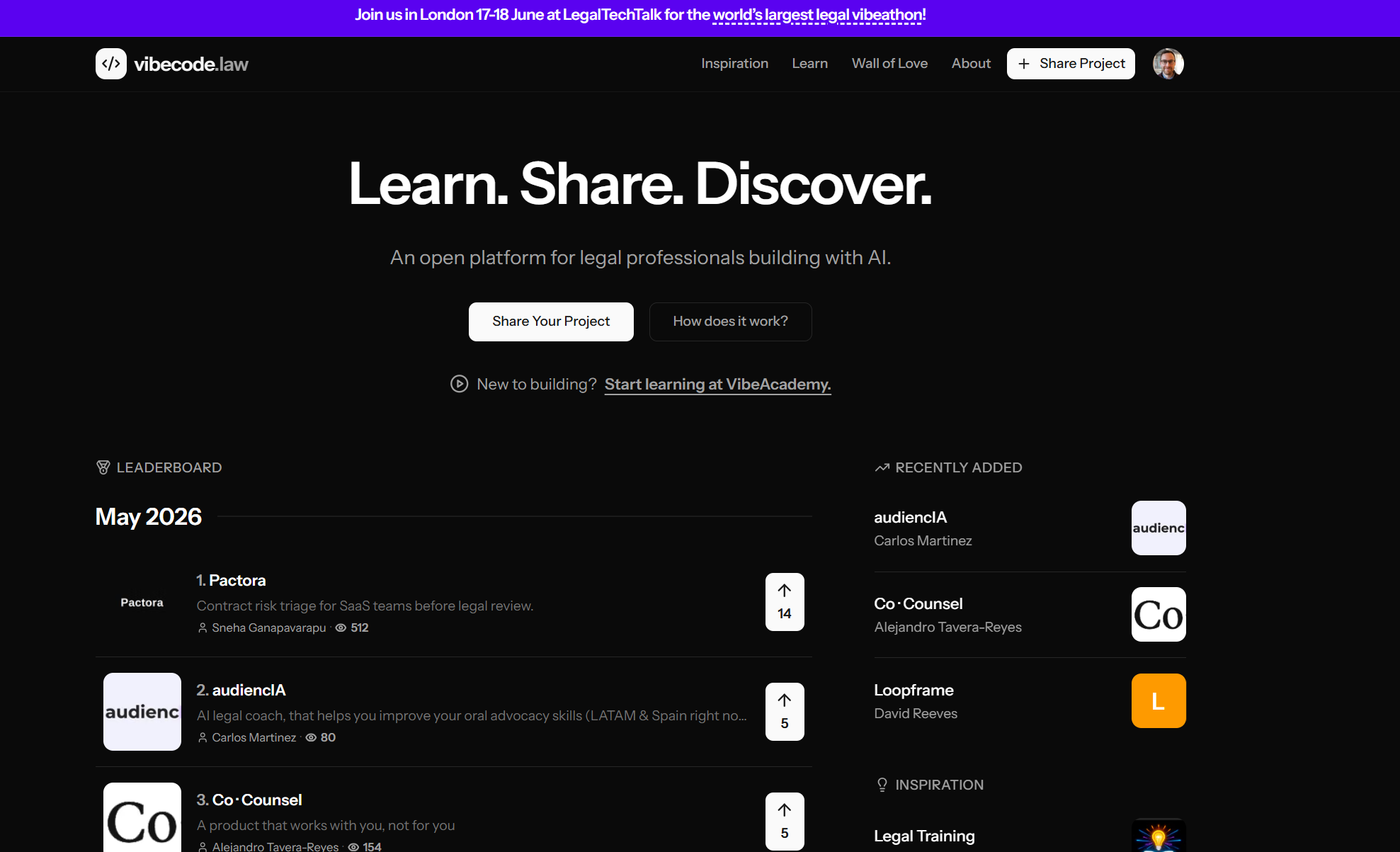
I’ve been vibecoding for more than a couple of years. I’m not sure how, but I ended up being one of the first few hundred users of Replit Agent. I even spent a couple of hours on calls with their Product team giving feedback on v1. And I have probably built north of 100 apps at this point. I’ve learnt a lot along the way, and some of it is captured in the Vibe Academy module on Vibecode.law.
I’m passionate about a future where everyone can build things. If you think about what most knowledge workers create today - it’s documents, emails, powerpoint presentations, Excel spreadsheets. A handful of artifact types to store and convey all information.
It wasn’t always this way, and I don’t think it will be this way forever. I think there’s a future in which we create and share apps or artifacts just like we create and share documents today.
I’ve noticed that the debate on vibecoding has become a little polarised into those who say “Engineers are finished!” and those who say “Vibecoding is dangerous, don’t even touch it!”
As always, the reality isn’t so extreme. Vibecoding is the most powerful tool I’ve come across to get ideas out of people’s heads. This doesn’t mean vibecoded apps are “production-ready” out of the box. It also doesn’t mean we should give up the game and avoid experimenting.
Go build things. Just know your limits and apply common sense when you do.