


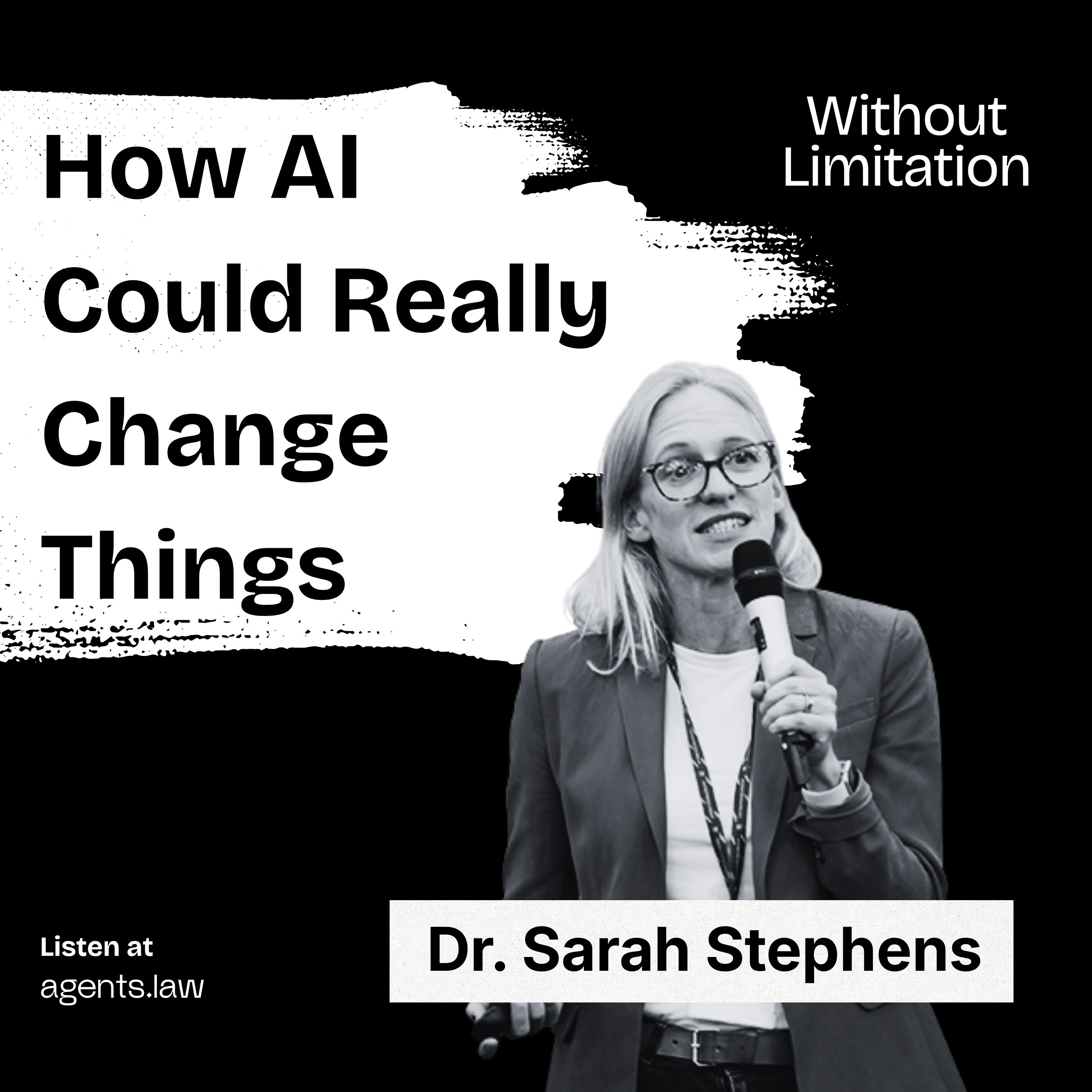
In this episode, I meet Dr. Sarah Stephens and learn how an AI Assistant in WhatsApp is solving real problems for women in Tanzania
Introducing Dr. Sarah Stephens
Dr. Sarah Stephens isn’t your typical legal technologist.
She started her career on a traditional path, training at the global law firm, Linklaters.
But a summer volunteering on grassroots access to justice projects in Kenya, working with children and widows navigating life-limiting legal situations, set her on a very different path.
Nearly two decades later, she’s running an AI-powered legal empowerment platform in Tanzania, sitting on the UK’s Online Procedure Rules Committee, leading the Sussex Centre for Law and Technology, and launching a new AI law lab.
I’ll confess, I have struggled with the term “access to justice”. It feels like one of those terms that mean different things to different people and it can sometimes feel abstract. This conversation and Sarah’s work helped me think about it differently.
Meet Dada Wakili
After Linklaters, Sarah moved through Kennedy’s, picked up a master’s in human rights law, and took a case to the Human Rights Court with Coram Children’s Legal Centre and won.
Then came the opportunity to relocate to East Africa, where she went in-house with KPMG in Tanzania. That’s where it all clicked.
In Tanzania in 2015, Sarah watched M-Pesa, the mobile money platform, transform financial inclusion through mobile phones and asked herself: why can’t we do the same for legal services?
That question ultimately became Dada Wakili - dada meaning sister, wakili meaning lawyer.
It’s an AI-powered chatbot on mobile phones, integrated with WhatsApp, that guides women through the justice issues they encounter in daily life.
The focus on women came from the field research. Tanzania has a pluralistic legal system, with statutory, religious, and customary law all interplaying, and the gaps fall hardest on women. A husband dies, the family invokes customary rights, and the widow and children lose their home. It’s unconstitutional. But nobody tells them that. That’s where Dada Wakili comes in.
The design challenges are real: laws still written in English from the colonial era, training data split across two languages, feature phones in rural areas with no smartphone access. The team is Tanzanian-led, engineers, lawyers, partners, and the whole thing is free to users. It’s currently grant-funded by Irish Aid and the FCDO, but finding sustainable financing remains the hardest problem to crack.
How to get involved
Sarah is actively looking for law firms, legal tech companies, and organisations interested in supporting Dada Wakili or collaborating on the Sussex AI Law Lab. Connect with her on LinkedIn.
What “Access to Justice” really means
Sarah pushes back, gently, on the phrase. Access to what, exactly? In the UK we tend to think courts, advice, enforceable remedies. In Tanzania, justice might mean resolution within a customary system. She prefers the frame of legal empowerment: building someone’s individual capability to act on information they’ve received. And she’s clear that AI won’t solve the access to justice crisis, because the crisis isn’t one thing. It’s a web of policy failures, funding gaps, and poverty.
New rules for online courts
Appointed by the Lord Chancellor, Sarah sits on the committee writing the rules for England’s online court system. The inclusion framework she’s been working on provides principles for legal tech builders across the digital justice ecosystem, covering pre-action advice tools, online dispute resolution, and self-help tools, with the vision of end-to-end data flow from early advice through to court. The rules are deliberately short and plain. No white book.
Sussex, students, and the skills question
The Sussex Centre for Law and Technology teaches AI literacy, innovation, and building. Sarah’s view is that lawyers need wider life experience and tech fluency more than ever, but also that AI critical literacy matters as much as AI enthusiasm.
Her students are asking hard questions about bias, data, and environmental cost. Some refuse to use generative AI because of its water consumption. Every tool, she feels, should carry an environmental statement.
The new Sussex AI Law Lab (SAILL) will run real use cases from the university’s legal clinics and partnerships with organisations like Citizens Advice, and get students actually building. (I’m hoping to support by providing a course of vibecoding!)
Where next for Dada Wakili?
After a big week at the Legal Tech for Access to Justice East Africa conference and a national TV appearance (far more challenging than my podcast I’m sure!), Dada Wakili is expanding from smartphones to feature phones via USSD and SMS, reaching more remote communities across Tanzania.
Partners from other countries are already asking when it’s coming to them.
If you’re inspired by her work, please reach out to Sarah directly on LinkedIn.
Links


