


What We Covered
Richard’s 40 years of working with law firms on pricing
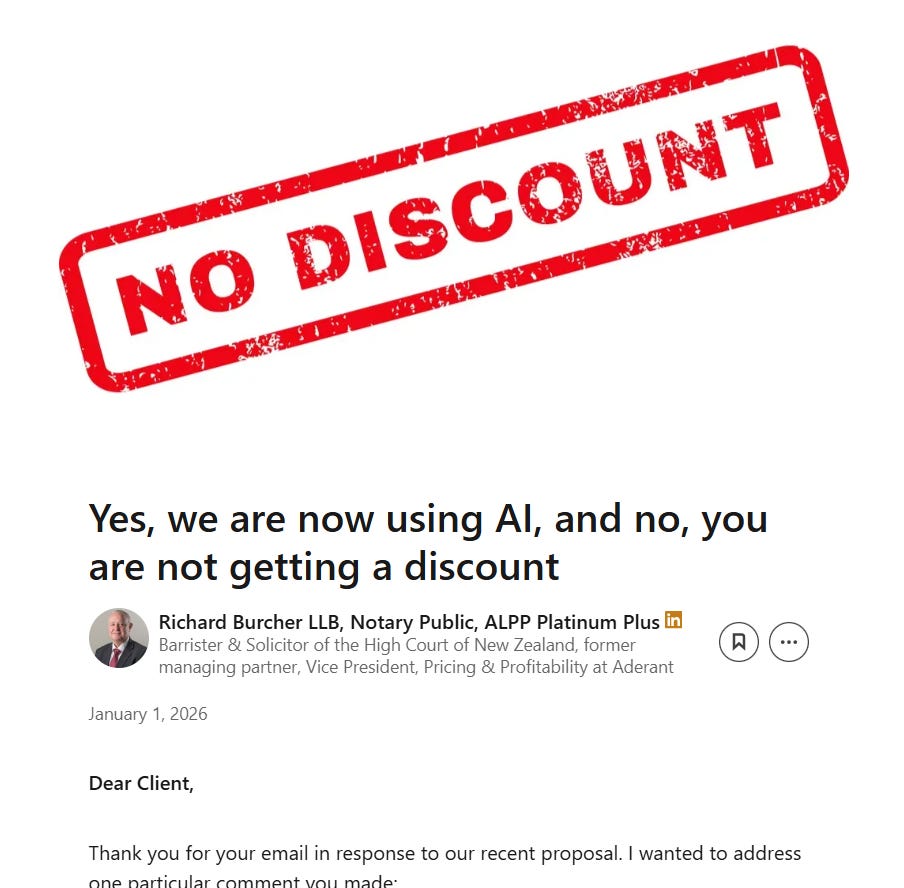
His viral LinkedIn post from January 2026 that sparked debate: a fictional partner’s letter explaining why AI may not mean lower fees - we get into the arguments for and against
Richard’s view that transparency and benefit-sharing between firms and clients is the only sustainable path forward
The difference Richard has observed between what clients say they want (lowest price) and what actually drives their buying decisions
How productised legal services like Littler’s employee classification tool represent a new pricing paradigm
The “creative destruction” mindset firms need to avoid being disrupted
Richard’s journey from managing partner to pricing consultant, and the Aderant acquisition of Virtual Pricing Director
Key Takeaways
Richard believes firms that have invested heavily in AI tools deserve ROI on that investment, not a race to the bottom on fees
When GCs were asked to prioritize price factors, less than 10% chose “lowest price” as most important
Richard believes the winning formula is transparent benefit-sharing: if AI reduces delivery cost from £100k to £70k, billing £85k splits the value fairly
Clients aren’t just buying legal advice. They’re buying security, reassurance, and the firm’s professional indemnity coverage
If you don’t destroy your own business model, someone else will
The legal profession’s greatest pricing limitation is lack of confidence. As one senior partner told Richard: “If you don’t think you’re worth it, why should anyone else?”
Legal work will grow, not shrink. Life and commerce are getting more complex, and AI itself creates new advisory opportunities
Technology alone won’t transform pricing. Sustainable change requires addressing people, process, and technology together


