


The latest rabbit hole I’ve gone down is looking at how lawyers have charged for their work through history. What I’ve learned is that the challenge of figuring out how to bill for legal work, and debates around time vs. outcomes, are not unique to our generation. And maybe there are some things we can learn from all the different models that have gone before. I hope you find it interesting!
Legal work has always been hard to price
Legal billing is the history of repeated attempts to solve one persistent problem: how do you price work whose scope is often uncertain, whose value may only become clear long afterwards, and whose quality the client often cannot fully judge themselves?
It turns out, that problem is much older than the billable hour. For most of legal history, lawyers in England and Wales, and later in the United States, were paid based on things other than time. They were paid through gifts, retainers, fixed charges, court-approved costs, statutory tariffs, contingent rewards, negotiated fees, and only much later by the hour.
Each model made legal work priceable in a different way but none solved the underlying problem completely. Fixed fees give certainty but depend on a clear scope, which is often hard to identify at the outset. Contingency fees widen access but tie lawyers’ income to an outcome that may be beyond their direct control. Court assessment offers oversight but can be slow and artificial. Hourly billing records effort but not necessarily value. Alternative fee arrangements promise predictability but often rely on time data behind the scenes.
The legal bill, in other words, is not just an invoice. It is an attempt to price work that is just very difficult to price.
Prelude: Paid Legal Help Before Lawyers (c. 400 BCE-500 CE)
Legal fees began long before common law.
In classical Athens, litigants generally spoke for themselves, but they could pay professional speechwriters, or logographers, to prepare arguments for court. The paid specialist did not necessarily stand up as an advocate in the modern sense. The client delivered the speech. But the economic problem was already recognisable: someone with legal and rhetorical skill could turn a dispute into a more persuasive case, and that skill had a price.
Rome developed a different version of the same thing. Advocacy was associated with honour, status, and public service, yet payment persisted through gifts, and eventually regulated fees. The Lex Cincia of 204 BCE restricted gifts to advocates for pleading cases; later imperial law allowed advocates to receive fees within limits. Long before the common-law solicitor or the American law firm, legal systems were already trying to distinguish honourable assistance from commercial exploitation.

This older history is interesting because it shows that the pricing problem is not a modern invention. But the main story of the modern legal bill begins later, with the English common-law profession and the American legal market that grew from it.
Part One: Gifts and Robes (c. 1100-1500)
The earliest problem was that legal fees were a bit embarrassing.
One part of medieval culture in England was the idea that knowledge was not an ordinary commodity. There was a general maxim that knowledge was a gift from God - and this meant that selling it was seen as morally different from selling tangible commodities like land, cloth, or grain.

No doubt, English common-law practitioners were quite capable of charging for their services. But the moral aspect mattered and this meant that payment for these services was often softened into gifts, robes, hospitality, favours, and (sometimes) retainers. The language let lawyers receive payment while preserving the claim that law was a learned calling, not simply a trade.
This moral unease led to some very practical challenges. For example, in some systems, lawyers could not treat unpaid fees like ordinary commercial debts. The client’s payment was expected, but the professional relationship was not meant to look like a straightforward sale.
The point here is not that billing in this period was purely altruistic. It’s more that it laid the foundation of legal billing being a slightly awkward dance because it positioned legal work as a “calling” and a “profession” as opposed to a simple service.
Part Two: Tasks and Retainers (c. 1300-1700)
By the later medieval and early modern periods, the English legal profession had become a lot more organised.

Over several centuries, England developed various formal ranks and roles: serjeants-at-law, attorneys, solicitors, barristers, clerks, and court officers. These categories did not emerge all at once, and they did not remain stable. The solicitor became recognisable later than the attorney; barristers and solicitors took shape over time; serjeants declined. But the broad pattern in this period was of legal work becoming increasingly organised through professional roles, each with its own customs of payment.
In this period, legal work was often priced by task. A lawyer might be paid for an appearance, a pleading, a writ, advice, travel, waiting, or continuing availability.
Retainers were also central. Wealthy clients, towns, churches, and the Crown used retainers to secure loyalty, priority, and access to expertise. A retainer did not necessarily price a single piece of work but it priced availability and relationship.
One thing we didn’t see much of at this time was hourly billing. It was a world of customary charges, professional rank, procedural acts, and continuing obligations. The price of legal work was effectively tied to what was done, who did it, and for whom.
That world crossed the Atlantic with English legal culture. Early American lawyers inherited many of the same assumptions: retainers, task-based charges, court fees, professional status, and the sense that legal payment was not simply an ordinary services transaction.
Part Three: Rule-Based Fees (c. 1700-1900)
By the eighteenth and nineteenth centuries, the answer became a lot more official, and regulation started to kick in. If clients couldn’t really judge legal value, courts and public rules could help decide what was reasonable.

England developed a strong tradition of scrutinising solicitors’ costs. Bills could be “taxed”, meaning they were reviewed by court officers. I believe the modern term is “detailed assessment”, but the underlying idea is very old: a solicitor’s bill, especially in litigation, is not just a private invoice. It can be examined by the court.
This mattered because English litigation costs were not only about the contract between solicitor and client. They were also about what one party might recover from another. A bill had to be broken down into recognisable items: attendances, documents, hearings, travel, waiting, counsel’s fees, disbursements. The result was a culture of detailed legal costing before the billable hour became dominant.
America leaned more heavily on statutory and bar-backed fee schedules. A will, title examination, writ, adoption, or routine matter might have a customary or published price. These schedules made legal charges more predictable but they also made the profession vulnerable to the perception that it was fixing prices.
The underlying assumption in this period is interesting - it’s that legal fees were effectively too sensitive to leave entirely to private bargaining. The problem of pricing legal work was often treated as a matter for custom, statute, court supervision, or professional control.
Part Four: Lawyer/Client Risk-Sharing (c. 1800-present)
The first major Anglo-American divergence came over contingency fees.
In the United States, contingency arrangements became increasingly accepted during the nineteenth century. They solved an access problem - i.e., a client without money could still bring a claim by promising the lawyer a share of the recovery. The lawyer priced not only labour, but risk: the possibility of doing substantial work and receiving nothing.
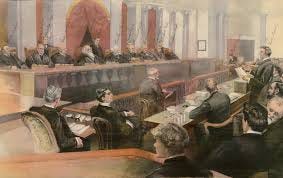
The logic made sense - rights are worth little if a person cannot afford the means of enforcing them. American courts and lawyers increasingly accepted that contingency fees could open the courthouse door to clients who could not pay in advance.
England resisted this logic for longer. There was a strong suspicion of litigation funding by someone with a stake in the result. The worry was that such arrangements might encourage speculative litigation, distort justice, or give outsiders improper control over disputes.
That resistance did eventually soften. Conditional fee agreements were enabled under the Courts and Legal Services Act 1990. So, England and Wales reached outcome-linked pricing later, more cautiously, and with a lot more regulatory friction than the United States.
The divergence is a good example of how legal billing is never just accounting. It reflects a culture’s view of access to justice, risk, professionalism, and the proper relationship between lawyer and client.
Part Five: The Timesheet Arrives (c. 1910-1940)
The billable hour didn’t actually begin as the obvious next stage of legal billing. It began in the world of legal aid.

Reginald Heber Smith, a Harvard-trained lawyer, worked at the Boston Legal Aid Society in the 1910s. The Society handled thousands of matters with limited resources. Smith needed to understand where lawyers’ time was going - so the daily timesheet was actually a management tool before it was a billing tool.
When Smith joined Hale and Dorr in 1919, he brought that managerial habit into private practice. Time records helped the firm understand workload, efficiency, staffing, and cost. At first, time was an input into judgment. It did not automatically determine the bill.
The six-minute unit was a small office convenience with large consequences. One tenth of an hour was easy to add and divide. A piece of administrative arithmetic became one of the most recognisable units in modern legal practice.
Smith’s system spread because it made legal work legible. It gave firms records. It gave clients detail. It helped partners understand associate labour. It fitted the increasingly managed law firm of the twentieth century.
The big change came when time stopped being only evidence and became the fee itself. A partner could once look at time records, weigh the result, the client, the difficulty, and the relationship, and then set a bill. By the middle decades of the twentieth century, more firms were moving toward a simpler formula: hours multiplied by rates. This transition turned the timesheet from a management aid into a revenue machine.
Part Six: The Hour Becomes The Bill (c. 1940-1980)
The hour spread because it made legal work look explainable. A bill could say: this lawyer worked this long, at this rate, on this task.
This was of particular importance in the US, where large firms were becoming more leveraged, with partners supervising cohorts of salaried associates. The model most often associated with that change is the Cravath system, named after Paul Drennan Cravath of the New York firm now known as Cravath, Swaine & Moore. It was not really a billing system - it was a way of organising a commercial law firm: recruit elite law graduates, train them through partner-led work and rotations, pay them salaries, promote a small number from within, and expect many others to leave along the way.

That structure changed what firms had to price. A modern firm was no longer only selling the personal attention of a few senior lawyers. It was also selling the organised labour of associate teams. Hourly billing fitted that structure much better. Associate time became measurable, comparable, and billable. It gave firms a way to manage production and gave clients a detailed account of effort.
Then came Goldfarb v Virginia State Bar in 1975. Lewis and Ruth Goldfarb needed a title examination for a house purchase in Fairfax County, Virginia. The local minimum fee schedule set the price at one percent of the property value. The US Supreme Court held that the fee schedule and its enforcement mechanism violated the Sherman Act, describing the arrangement as a “classic illustration” of price fixing.
So, once official price floors became untenable in the United States, hourly billing looked even more attractive: not a cartel price, but a documented calculation. This person worked this long - this is the rate, this is the bill. Who could argue with that?
It also suited the institutions around legal work. Tax authorities, courts, insurers, procurement teams, finance departments, and law firm managers could all understand time-and-rate billing. It was legible, disputable, auditable, and easy to put into systems. That institutional convenience helped lock the hour in place.
England and Wales reached the hour differently. There was no direct Goldfarb moment. The English tradition of costs assessment and itemised bills remained important. But as City firms competed with American firms and served international commercial clients who expected time-based bills, hourly billing became increasingly influential.
By the late twentieth century, the billable hour had become the shared language of commercial legal pricing on both sides of the Atlantic, even though the two systems had reached it by different routes.
Part Seven: The Revenue Machine (c. 1980-2008)
By the late twentieth century, the billable hour had become more than just a pricing method - it became a law firm operating system.
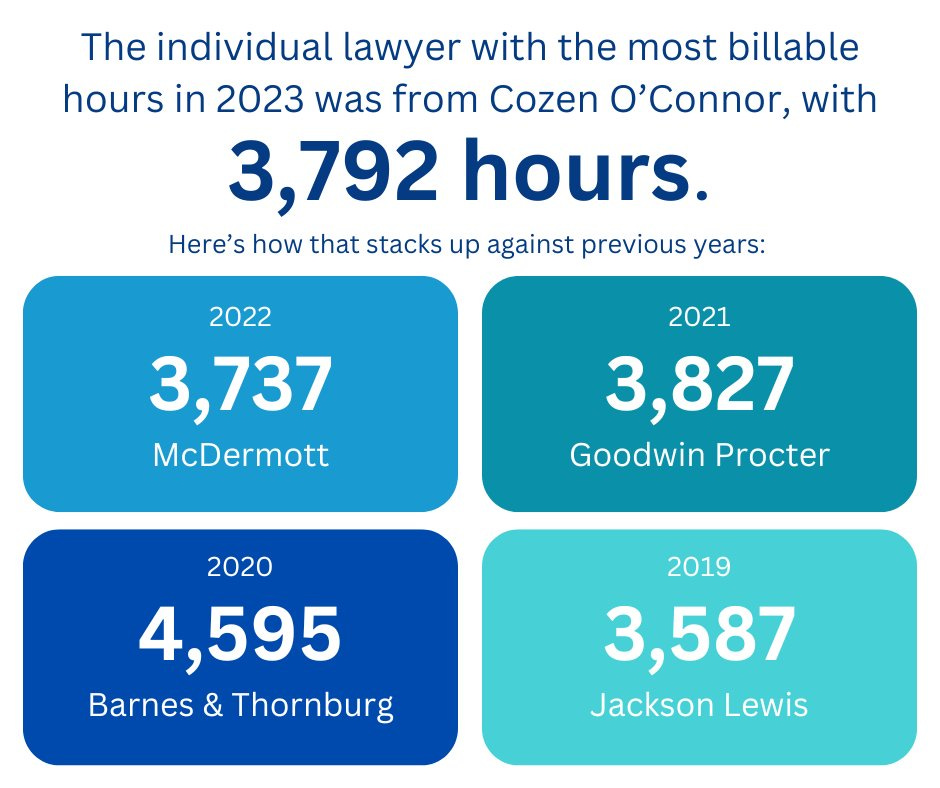
Firms set annual billable-hour targets, associates were assessed by recorded time, and partner profits depended on leverage, rates, utilisation, and realisation. The hour measured not only client cost, but also internal productivity.
This solved some problems - it handled uncertainty, it produced records, and it worked across litigation, transactions, investigations, and advisory work. But it also created new tensions. Most obviously, it priced effort rather than outcome. It shifted much of the risk of inefficiency onto the client. It made legal bills auditable, but also contestable line by line. It explained what lawyers did, but not always what the work was worth.
The internal consequences were just as important. Recorded time became a measure of productivity, status, commitment, and economic contribution. Associate targets rose and the timesheet became part of promotion, compensation, staffing, and firm culture. “How busy are you?” became the conversation starter in law firm corridors from London to New York.
That is why criticism of the billable hour became so persistent. The objection was not simply that it could be expensive but also that it priced input in a profession whose value often lies in judgment, outcome, risk reduction, and trust.
Part Eight: The Hybrid Era (c. 2008-Present)
The present did not begin with the death of the billable hour. It began as a hybrid.
After the financial crisis of 2008, corporate clients pushed harder for budgets, caps, fixed fees, blended rates, retainers, subscriptions, and other alternative fee arrangements. General counsel wanted more predictability, more discipline, and more control over outside legal spend. We saw procurement teams get involved in fee negotiations.
Firms still recorded time, courts still used hourly rates in costs assessments, and clients still received hourly bills. Associate utilisation was still measured in hours. But fixed fees, capped fees, blended rates, retainers, conditional fees, damages-based agreements subscriptions, and other creative models increasingly sat alongside the hour.

Many of these alternatives still depended on time data. A fixed fee was often built from expected hours. A cap assumed a forecast of work. Even when the invoice no longer showed every tenth of an hour, the clock often remained inside the pricing model.
Recent transparency reforms added another layer. Since December 2018, SRA-regulated firms in England and Wales have had to publish price and service information for specified areas such as residential conveyancing, uncontested probate, motoring offences, immigration, employment tribunal claims, debt recovery, and licensing applications. This did not create a general tariff, but it reflected the same recurring concern: clients need help understanding what legal work may cost.
This is why predictions of the billable hour’s death repeatedly proved premature. Clients often dislike its unpredictability, lawyers sometimes criticise its incentives. But time records remained useful because they produced data about effort, staffing, cost, and profitability.
What has really happened in this most recent period is not the disappearance of time. It is the declining assumption that time alone must always be the client-facing price.
Where Next?
Generative AI is already starting to put law firm pricing under pressure.
AI systems can draft, summarise, compare, classify, search, translate, and review at speeds that make hourly billing awkward. If a task that once took five hours takes twenty minutes, the old arithmetic breaks. A lawyer cannot honestly bill five hours merely because the task once required five hours. But it also does not follow that the work is worth only twenty minutes.
That is the new pricing problem. AI compresses production time, but it does not eliminate legal value. The valuable work moves elsewhere: choosing the right question, selecting the right tool, protecting confidential information, checking the output, spotting what is missing, exercising judgment, advising on risk, and standing behind the result.
There isn’t a law firm I speak to these days whose clients aren’t congratulating them on their recent AI press release, while also asking “So tell me about the efficiency saving on my next matter…”

Regulators are already circling the issue. In 2024, the American Bar Association’s Formal Opinion 512 stated that lawyers who bill hourly must bill for actual time spent when using generative AI. It also warned that lawyers generally cannot bill clients for time spent learning tools they should competently know how to use, while leaving room for advance agreement about charges for particular AI tools or workflows. The opinion is advisory rather than legislation, and bar guidance will not be identical everywhere, but it captures the pressure AI puts on hourly billing.
In England and Wales, the Solicitors Regulation Authority has also noted that AI may speed up work that would usually be billed by the hour, and that billable hours could become outdated if technology changes the time required to complete tasks. The SRA’s discussion sits alongside familiar regulatory concerns: accuracy, supervision, confidentiality, data security, transparency, and professional accountability.
This suggests that the next era may put more weight on the idea of assurance (or even insurance). This isn’t new - clients have always bought some mixture of reputation, regulation, professional indemnity, confidentiality, and accountability. What AI perhaps changes is the ratio. If less visible labour is needed to produce a draft, search result, summary, or review (or indeed if clients can self-serve), the fee has to be justified by the lawyer’s supervision, verification, judgment, accountability and possibly insurance.
If the billable hour priced effort, AI forces the profession back to an older question: what is the client actually buying?
The result for now is most likely another hybrid. Routine “run the company” work may move toward fixed fees, subscriptions, productised services, and volume pricing. Complex “bet the company” matters may remain at least partly hourly where uncertainty is high. Some firms may charge for AI-enabled workflows by task, work product unit, or outcome. Courts and regulators will still ask whether charges are reasonable. Clients will ask whether they are sharing in the efficiency gain. And if AI companies increasingly charge by the token (given the expected compute crunch on the horizon), maybe we’ll end up with “The Billable Token” alongside “The Billable Hour”.
Final thoughts
The story of the last 2,000 years suggests caution about predicting that any one approach will win.
Every supposed final answer to legal pricing has turned out to be partial. Legal billing keeps changing because the underlying problem does not go away: how do you price work whose scope is uncertain, whose value may only become clear afterwards, and whose quality the client often cannot fully judge?
I don’t have the answer - but I’m confident lawyers will find ways to capture the value of their work for many years to come.